


In construction and real estate development, schedule management is far more than just “meeting a deadline.” For investors and project owners, time is directly equivalent to profit. However, many projects face significant delays that result in substantial financial losses and damaged reputations.
This article shares professional expertise based on Plus PM Consultant’s history of managing numerous high-stakes projects. It explains how schedule delays erode Return on Investment (ROI) and how a ‘Smarter Schedule Management’ approach can protect your investment.
1. The “Iceberg” of Delay Costs: Hidden Financial Erosion
When a project is delayed, the immediate focus is often on visible “direct costs” such as Liquidated and Ascertained Damages (LAD) or contractor prolongation claims. However, as the “iceberg” analogy suggests, the most devastating impacts are often hidden beneath the surface.
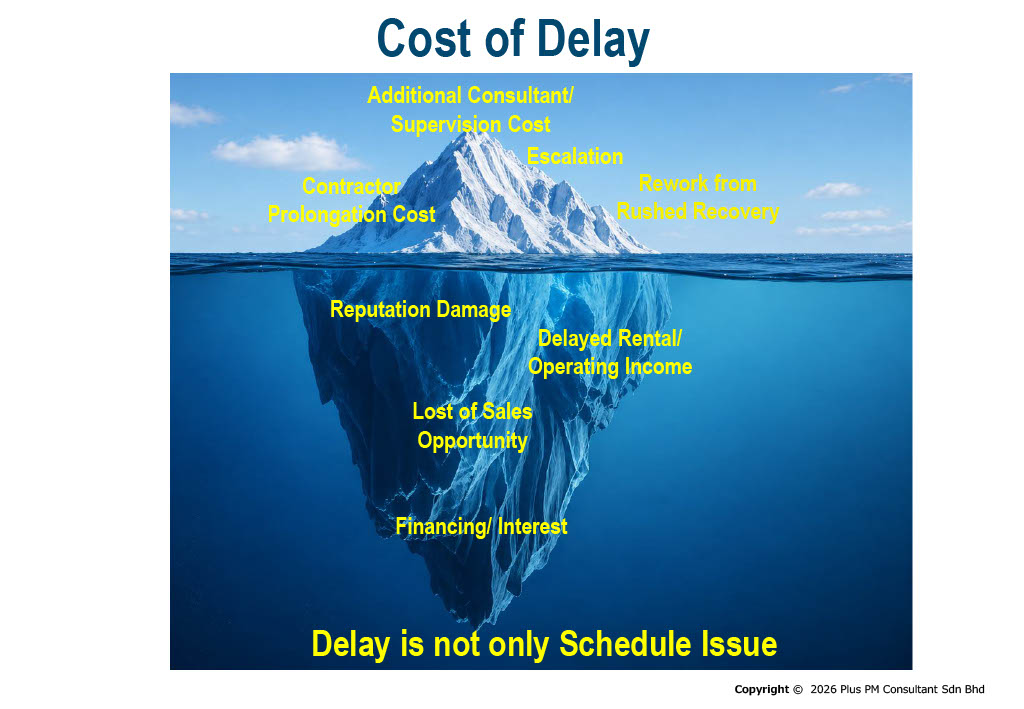
◆Delayed in Revenue Generation
Every day of delay is a day of lost revenue—whether it is hotel room income, mall rental, or factory production and sales. For example, a delay of 200 days can result in a loss of over RM 1.13 million in potential rental income.
◆Increased Financing Costs
Longer project durations lead to higher interest payments on loans.
◆Reputational Damage
This is perhaps the most critical indirect cost. It takes years to build a reputation for reliability, but it can be destroyed by a single delayed project, taking many more years to recover.
◆The Trap of “Rush Recovery”
Attempting to catch up through rushed work often leads to poor quality, rework, and even higher costs.
2. Delays Begin Long Before Construction Starts
A common misconception is that delays only happen on the construction site. In reality, they frequently originated much earlier in a project lifecycle.
Project Initiation:
Setting unrealistic timelines, often by investors unfamiliar with local regulations or construction practices in Malaysia.
Design Phase:
Slow decision-making or approval processes from the client side, and poor coordination between consultants resulting in drawing errors.
Tender Phase:
A lack of a proper tender schedule. Tendering is a complex process involving briefings, clarifications, and interviews; without rigorous management, this phase easily slips.
🌟For a broader introduction to planning, master schedules and critical paths, read our “complete guide to construction schedule management.“

3. Shifting from “Reactive” to “Proactive Control”
Managing a project by reacting to problems as they arise is costly and inefficient. Plus PM Consultant advocates for “Proactive Control”—identifying risks early and managing the schedule strategically from day one.
Key strategies include:
◆Parallel Processes
Instead of following a conventional linear sequence, we tailored a project schedule according to the unique characteristic of each project such as managing authorities’ submissions (such as KM and BP) in parallel design and tender process. This can save significant duration on the overall development timeline depending on the complexity of the project.
◆Critical Path Focus
Actively identifying and monitoring the “Critical Path”—the sequence of tasks that directly determines the project completion date—to ensure resources are focused where they matter most.
◆Independent Monitoring
Rather than relying solely on contractor reports, our staff conducts independent on-site progress checks to ensure the data driving decisions is accurate.
Case Study: Protecting the Client through EOT Claim Evaluation
One of our strengths is the technical evaluation of Extension of Time (EOT) claims. We do not simply accept the data provided by the contractor in their claims; we verify them against data and regulations from our research.
Case 1: MCO Recovery
During the Movement Control Order (MCO) in Malaysia due to Covid-19 outbreak lockdown, a contractor claimed an 84-day EOT. By meticulously analyzing government circulars, critical path, concurrent delay by the contractor and the actual impact on the site schedule, we reduced this down to 47 days—a 37-day reduction, which significantly protected the client’s interests.
Case-2: Statutory Compliance
When a contractor claimed an EOT due to a “concrete supply shortage” caused by transportation truck overloading enforcement, we as the Engineer rejected the claim because the enforcement is on existing regulations. The client as foreign investor might not be aware on existing applicable regulations. Our stance ensured the contractor remained responsible for their own supply chain management by complying to regulations.
Conclusion: Strategic Planning is the Best Defense for Your Investment
The phrase “Time is Money” carries its heaviest meaning in construction projects. Strategic schedule planning from the initial stages, combined with monitoring by experts who deeply understand the field, is the only way to prevent additional costs and revenue loss while maximizing ROI.
Is your project currently in a “reactive” state, simply waiting for site reports? To protect your investment, we urge you to review whether “Proactive Control” is truly functioning. Proactive control from the early stages dramatically increases project success compared to the high risks of “reactive recovery” after a delay has already occurred.
■Key Points to Safeguard Your ROI
◆Treat “One Day of Delay” as a Loss of Profit
A delay is not just a scheduling issue; it is a direct financial hit to your cash flow and project returns.
◆Implement “Proactive Control”
Early risk identification and proactive management are far more effective and less expensive than rushing to recover a lost timeline later.
◆Actively Manage the Critical Path
You must identify the most vital sequences of work and focus management resources there to ensure the completion date is met.
◆Focus on the Pre-construction Phase
Delays also often happen during design, tendering, and approval processes. This stage is also critical in determining a project’s success.
◆Account for the Hidden Cost of Reputational Damage
Beyond liquidated damages, the loss of social trust and reputation is a long-term deficit that can take years to recover.
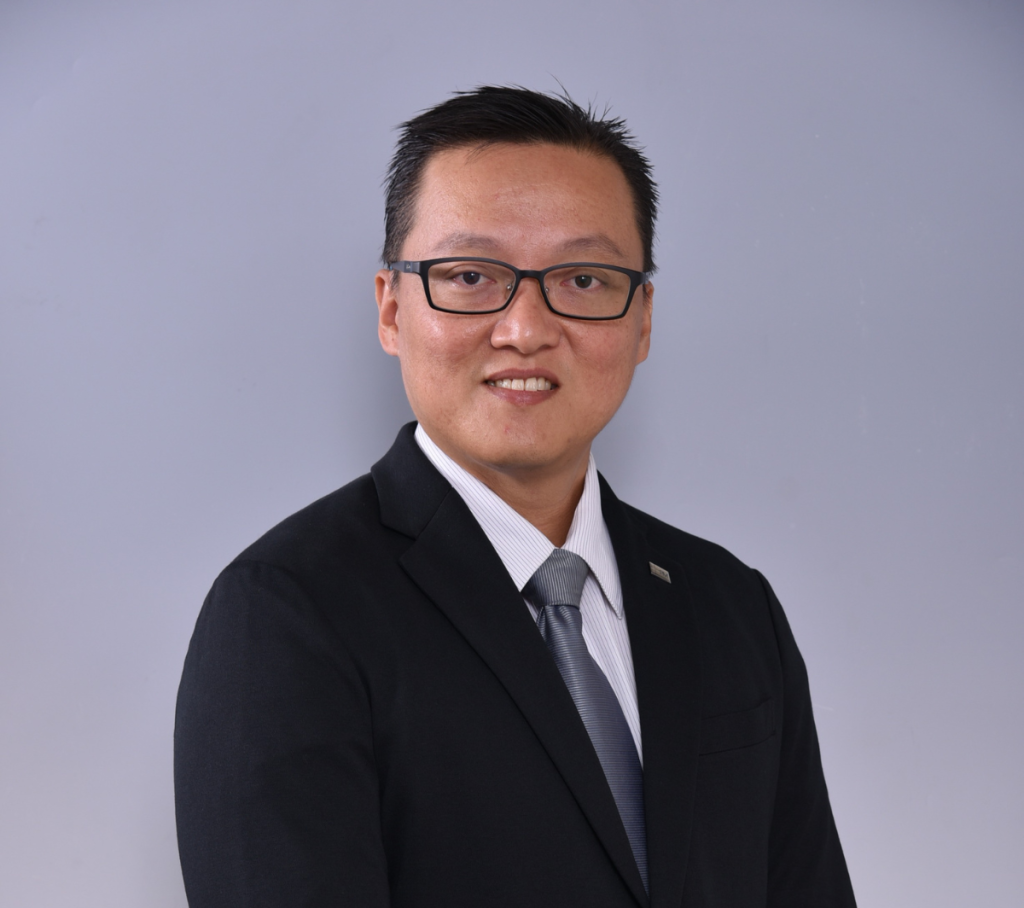
Supervised by: Yung Chung Yiung,
Senior Project Manager / Marketing Manager,
Plus PM Consultant Sdn. Bhd.
A construction leadership veteran with over 25 years of experience in managing high-impact international projects.
Are you concerned about schedule risks or potential delays in your current or upcoming project?
Plus PM Consultant’s experienced project management team is ready to help you navigate these challenges and ensure your investment stays on track. Contact us today to discuss how we can safeguard your project’s ROI.

.png)