

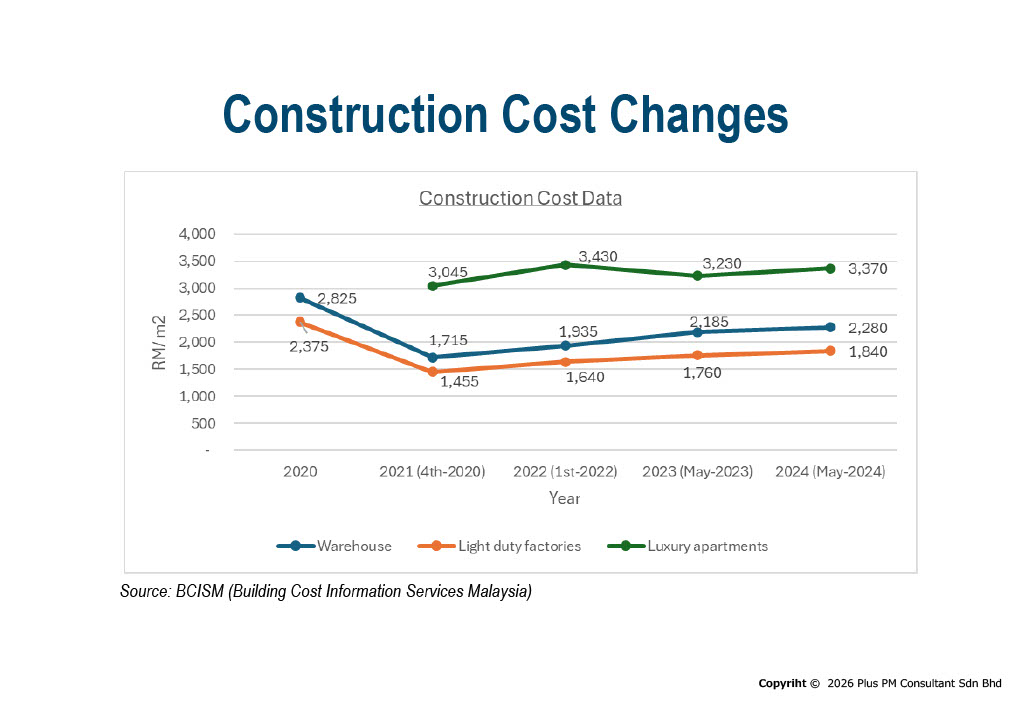
Smart cost control in construction is not simply about choosing the cheapest contractor or reducing project quality. It is about making informed decisions that protect project value throughout the project lifecycle.
No one wants their project to fail because of a budget overrun. But let’s be honest: in today’s world of rising material prices and supply chain disruptions, relying only on past experience is no longer enough.
At Plus PM, we’ve seen how strategic management can turn a struggling project around. Today, I want to share the secret of “True Cost Management” and show you how we helped one client save RM 50 million by stepping in at the right time.
Are You Just Cutting Costs, or Creating Value?
There is a common misunderstanding that cost management means choosing the cheapest contractor or lowering your specifications. But “cheap” can be very expensive in the long run.
If you compromise on quality now, your maintenance costs will skyrocket later, and the total value of your facility will drop. True cost management is about delivering maximum value with minimum cost. It’s about making smart, high-level decisions that align your design perfectly with your business goals
The “Hidden” Budget Killer: The 45% Rule
In industrial projects like factories or data centers, people often focus on the building’s structure. However, the biggest cost isn’t usually the walls or the roof.
While the Civil, Structural, and Architectural (CSA) works make up about 38% of the cost, the Mechanical, Electrical, and Plumbing (MEP) systems account for approximately 45%. If you don’t have a precise grip on these MEP costs from the very beginning, your budget accuracy is at major risk.
Where Does the Money Actually Go? (Mind the Gaps)
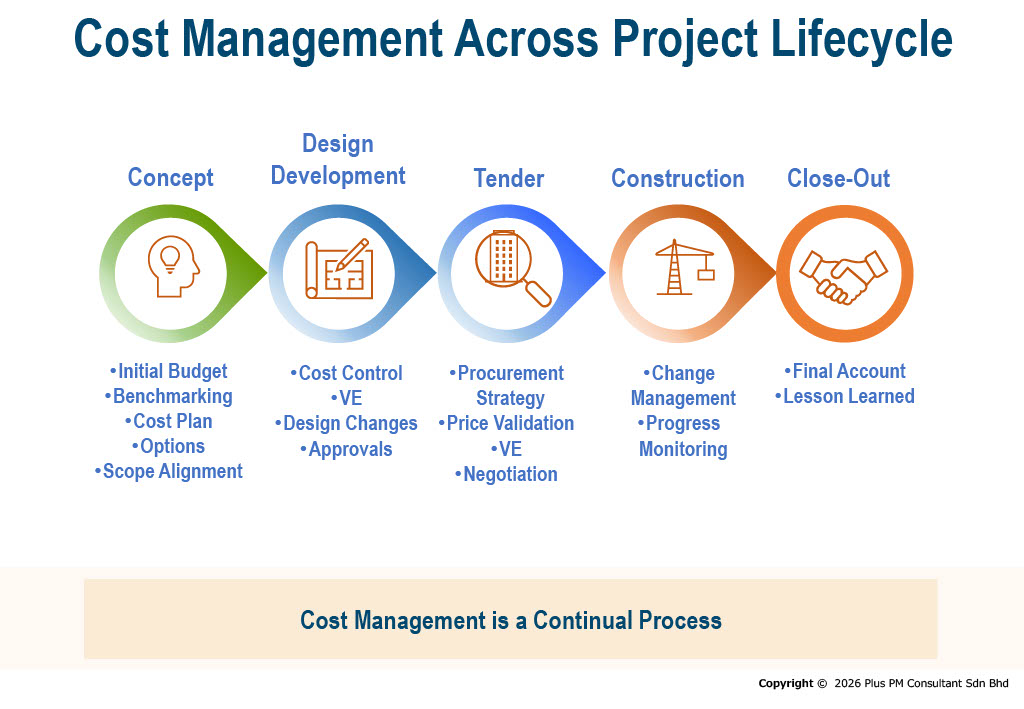
Cost overruns don’t just happen during construction. “Value leakage” occurs in the gaps between project phases:
- Concept Stage: Starting with an inaccurate budget or unclear requirements.
- Design Stage: Over-specifying materials or delaying key decisions.
- Tender Stage: Incomplete documentation or choosing the wrong procurement strategy.
- Construction Stage: Contractor claims, delays, and poor variation management.
To stop the leak, you need a seamless management framework that follows the project from the first idea to the final handover.
Success Story: Saving RM 50 Million Without Losing Quality
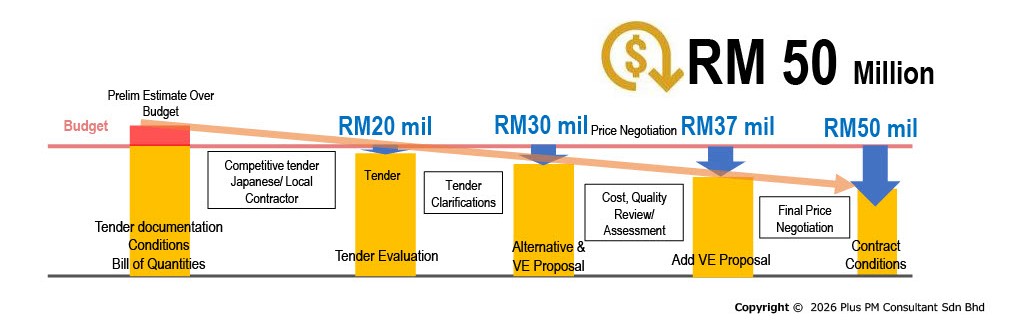
Let’s look at a real example. A new food factory project (55,000m²) was facing a massive budget crisis at the preliminary estimate stage. Plus PM stepped in to turn it around with three specific strategies:
- A Better Tender Strategy: We cleaned up the tender documents to remove any “grey areas” and invited both Japanese and local contractors to ensure fair, transparent competition.
- Smart Value Engineering (VE): We didn’t just ask for discounts. We challenged contractors to propose alternative materials and construction methods that did the same job for less money.
- Proactive Negotiation: We verified every line item in the estimates and corrected deviations in contract conditions to ensure the final price was fair and solid.
The result? We successfully reduced costs by RM 50 million from the initial estimate—without compromising on the project’s quality or functionality.
Conclusion: Early Intervention Determines ROI
In project management, there is an ironclad rule: The earlier you start managing costs, the stronger your ROI will be.
If you are concerned about budget overruns in your current or upcoming project, don’t wait until the construction phase to act. Strategic early intervention is the most reliable defense for your investment.

Supervised by: Kamarulzaman Contract Manager,
Plus PM Consultant Sdn. Bhd.
For a comprehensive overview of construction cost management, read our Construction Cost Management Essential Guide.
Do you have concerns about budget overruns or cost management in your current or upcoming projects?
Don’t let cost uncertainties compromise your investment.
Contact Plus PM today, and let’s solve these challenges together.

.png)